 PanPhonDee
The formula
Yield on cost = yearly dividend per share ÷ your average cost per share × 100
If you bought in several rounds, use the average cost across all of them. If the company pays more than once a year, add every payout from the last 12 months before dividing.
Example (illustrative, before tax)
- You buy at THB 40 and the first-year dividend is THB 2, so yield on cost is 5%
- Five years later the company has raised the dividend to THB 3 and the share trades at THB 60
- Dividend yield at market price = 3 ÷ 60 = 5%
- Yield on cost = 3 ÷ 40 = 7.5%
Same stock, same dividend: someone who buys today at THB 60 earns 5%, while you earn 7.5% on the money you actually put in.
How it differs from dividend yield
Dividend yield uses today's price, so everyone sees the same number. Yield on cost uses your cost, so each investor gets a different number. It tells you how your dividend income has grown. It is not a way to judge which stock to buy today.
Pitfalls
- It ignores gains and losses on the share price. Read it together with total return
- A high figure does not mean next year's dividend is safe; payouts can be cut or stopped
- A one-off special dividend inflates it. See what a special dividend is
- State whether you count before or after the 10% withholding tax, and compare like with like
FAQ
Does a high yield on cost mean the stock is good?
Not necessarily. It may be high because you bought very cheaply, or because the price has since fallen and you are sitting on a loss. The number only compares dividend income with the money you put in.
Which year's dividend should I use?
Use the total of the last 12 months, or the dividend you expect this year, and say which one you used.
Read next
See the yield on cost of your own portfolio
Enter your buy price and PanPhonDee calculates yield on cost for the portfolio and each stock (Pro feature).
Download on the App StoreGoogle Play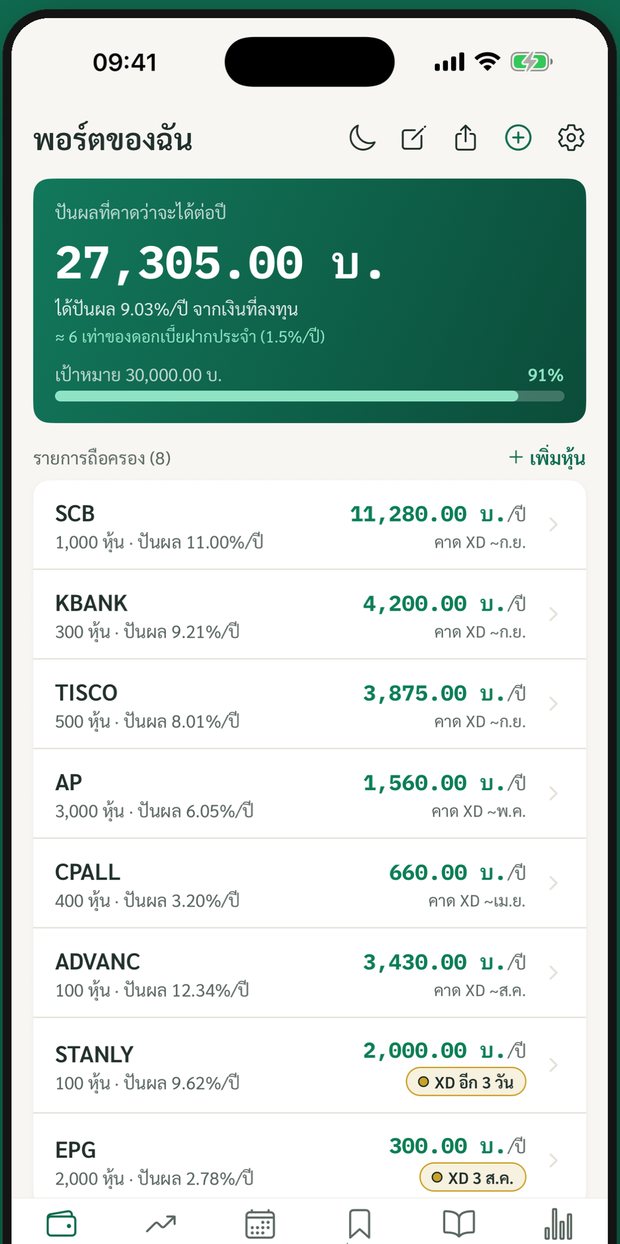
For information only. Not investment advice.