 PanPhonDee
A simple formula
Total return = (dividends received + gain or loss on the share price) ÷ amount invested × 100
Example (illustrative, before tax and fees)
- Bought a share for THB 100
- Received THB 5 in dividends that year
- Share price fell to THB 92 by year end, a THB 8 loss on price
- Dividend 5 + (−8) = −3 → total return −3%
Even with a 5% dividend, the actual result is negative because the price fell more than the dividend.
Why both parts matter
Dividend yield shows only the part the company pays back to you. It says nothing about where the share price is going. A stock whose price keeps falling can pay a high dividend and still lose value overall.
What else to check
- Price history over time, not just today's price
- Whether the company's profit is improving or declining. See a high dividend yield doesn't always mean a good stock
- Taxes and fees, which can make the real result lower than the numbers on paper
FAQ
Is dividend yield the same as total return?
No. Yield covers only the dividend divided by the price. Total return also includes the gain or loss on the share price.
When should I calculate total return?
When you review your portfolio regularly, such as at the end of each year, compare it with the amount you actually put into each stock.
This article explains general principles only. Not investment advice.
Read next
Check dividends and share price for your holdings
Add the stocks you hold to see the dividends you have received this year, with each stock's XD date, and compare with your actual result.
Download on the App StoreGoogle Play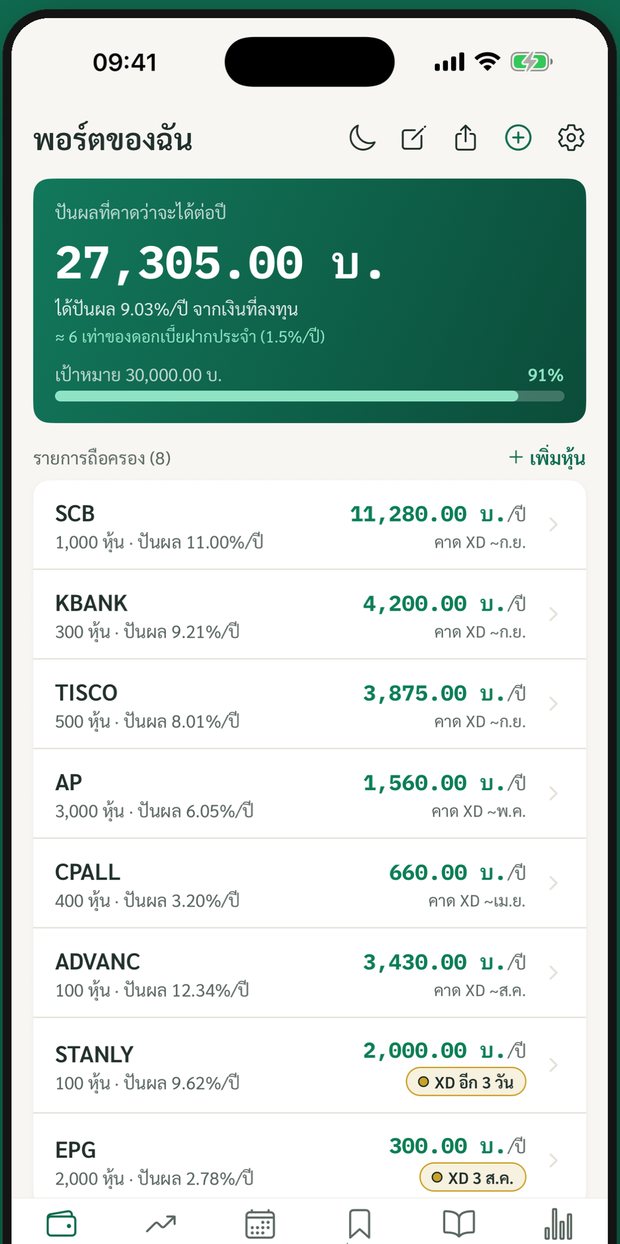
For information only. Not investment advice.