 PanPhonDee
1. Has the share price fallen?
Yield is the dividend divided by the price, so when the price falls, the yield rises even if the dividend has not changed. Sometimes the price has fallen because the market expects the business to get worse.
2. Is it a special dividend?
A one-off payout, for example from selling an asset, may not happen again next year. If you use it to calculate the whole year's yield, the figure will be too high.
3. Does profit support the payout?
Look at the payout ratio: dividend per share divided by earnings per share. If the company pays out close to 100% of profit every year, it keeps little to grow the business, and if profit falls the dividend usually falls too.
4. How many years has it paid?
Look at several years of history, not just the latest year. A stock that has paid steadily for years gives a more reliable picture than one that paid a high amount once.
One more thing: add up every payout
Some companies pay twice a year, and some funds and REITs pay quarterly. Yield has to add up every payout in the last 12 months. Do not compare a single payout with a full year's figure.
This article is general knowledge. It is not a recommendation to buy or sell any stock.
Read next
Check each stock's dividend history
Open a stock's page in the app to see how many years it has paid and how much each year. Then decide for yourself.
Download on the App StoreGoogle Play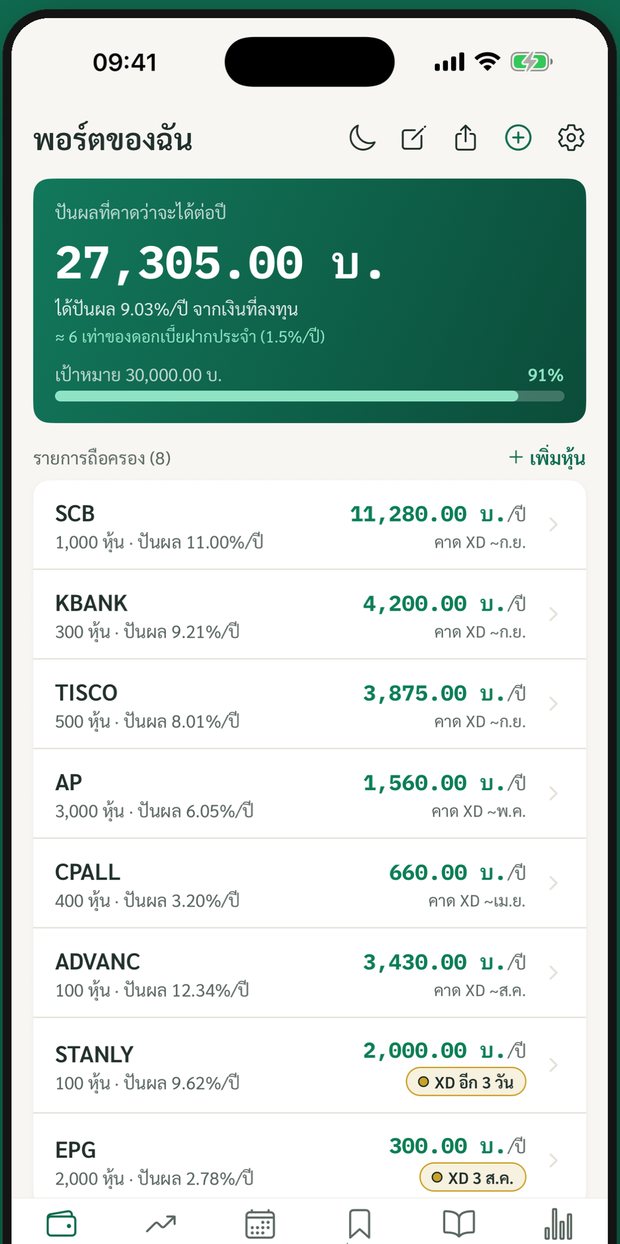
For information only. Not investment advice.