 PanPhonDee
The formula
Payout ratio = dividend per share ÷ earnings per share (EPS) × 100
Example (illustrative): EPS is THB 4 and the dividend is THB 2.80, so the payout ratio is 70%. The company pays out 70 satang of every baht it earns.
How to read it
- Low: the company keeps most of its profit to reinvest. There may be room to raise the dividend, but it may also just be a policy of not paying much
- Very high, near or above 100%: it pays out almost all, or more than, that year's profit. The gap must come from reserves or borrowing, which cannot go on for long
There is no single number that is good for every company. Policies differ by industry, so compare with companies in the same sector and look at several years.
Pitfalls
- A year's profit can include one-offs, such as a gain on an asset sale, which distort the ratio
- Accounting profit is not the same as cash received, so look at cash flow too
- REITs and infrastructure funds usually must pay out most of their adjusted net profit, so do not compare their payout ratio with ordinary stocks
- In a year when profit falls, the ratio jumps even if the dividend stays the same. Look at the trend, not one year
FAQ
Is a higher payout ratio better?
Not always. A high ratio returns more cash now, but if it leaves nothing to grow the business, or profit falls, the dividend usually falls too. See a high dividend yield doesn't always mean a good stock.
Where do I find earnings per share?
In the company's financial statements and the stock data on the Stock Exchange of Thailand (SET) website. Check the original source before you decide.
Read next
Check the dividend history of stocks you follow
Open a stock page in PanPhonDee to see how many years it has paid and how much each year, then compare with its profit yourself.
Download on the App StoreGoogle Play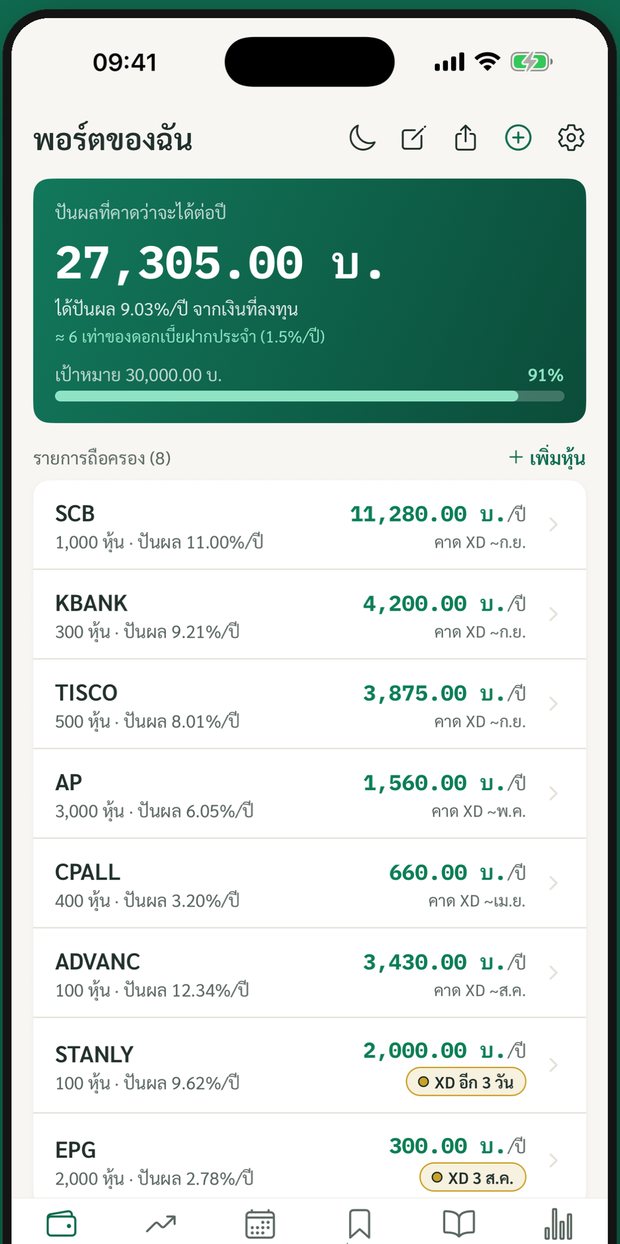
For information only. Not investment advice.